
When a Parent Won't Accept a Caregiver: What Actually Helps
Updated: Sep 10
Short answer
Resistance to in-home care is almost never about the caregiver. It is about what accepting one seems to admit. In AARP's 2024 Home and Community Preferences Survey, 75 percent of adults over 50 said they want to stay in their current home as they age. A caregiver arriving at the door can feel like the first step toward losing that. The approach that works is to make care the thing that protects
independence rather than the thing that ends it, and to start far smaller than most families do.
Why the resistance is not stubbornness
Families usually describe this as a parent being difficult. It is more useful to hear it as a parent being frightened, and being frightened of something specific.
AARP surveyed 3,090 adults between June 17 and July 1 of 2024. Among adults 50 and over, 75 percent wanted to remain in their current home as they age and 73 percent wanted to stay in their community. Only about half felt their community was actually equipped to support them.
Read that together and the fear becomes obvious. Staying home is the plan. Anything that looks like the beginning of not staying home is a threat, and to someone who has watched a friend go from a fall to a hospital to a facility, an outside caregiver looks like the first domino.
Almost every argument families have about this is really an argument about a much larger question that nobody has said out loud.
The four things people are actually afraid of
Losing independence
This is the big one. Accepting help is experienced as an admission that they can no longer manage, and once that is admitted, they fear the decisions stop being theirs.
The money
Many older adults have spent decades managing carefully and are genuinely alarmed by the cost. Some will refuse help they can afford because they are protecting an inheritance they have never mentioned.
A stranger in the house
This is legitimate and deserves to be treated as legitimate rather than argued away. A person is being asked to let someone unknown into the most private space they have, often to see them at their least dignified.
Being seen
The bathroom. The bedroom. The state of the house. The things they have been hiding from their own children, sometimes for years. Being helped means being observed, and being observed means the hiding is over.

How to open the conversation
What you say in the first five minutes usually decides the next six months.
Ask, do not announce. "I have hired someone to start Tuesday" produces a fight. "What would make the mornings easier?" produces information.
Lead with your own worry, not their deficits. "I lie awake thinking about you on those stairs" lands very differently from "you can't manage the stairs anymore."
Name the goal as staying home. Say plainly that the point of help is to keep them in this house longer, because that is true.
Give them the decisions. Which days. What hours. What the person does and does not touch. Interviewing candidates themselves if they want to.
Do not use the word caregiver at first if it is going to trigger a fight. Someone to help with the house. A hand with the driving. Company on Thursdays. The word matters less than the help.
Let a third party say it. Many people will accept from a doctor, a pastor, or a friend what they will not accept from their own child.
Do not do it at a holiday dinner in front of everyone. Alone, unhurried, not in a crisis.
Start smaller than you think
The most common mistake is proposing too much at once. Twenty hours a week from a stranger is a shock. Four hours on a Tuesday is an experiment.
Start with the thing they already resent doing. Heavy cleaning. Laundry. Driving to appointments. Grocery shopping. Nobody's dignity is threatened by handing over the vacuuming.
Then let the relationship do the work. Personal care almost always becomes acceptable later, once there is a person rather than a category. Trying to begin with bathing assistance from someone they met an hour ago is how families end up with a refused caregiver and a parent who now says no to everything.
Frame it as a trial. Two weeks, then we talk. A trial is reversible, and reversible is what makes it possible to say yes.
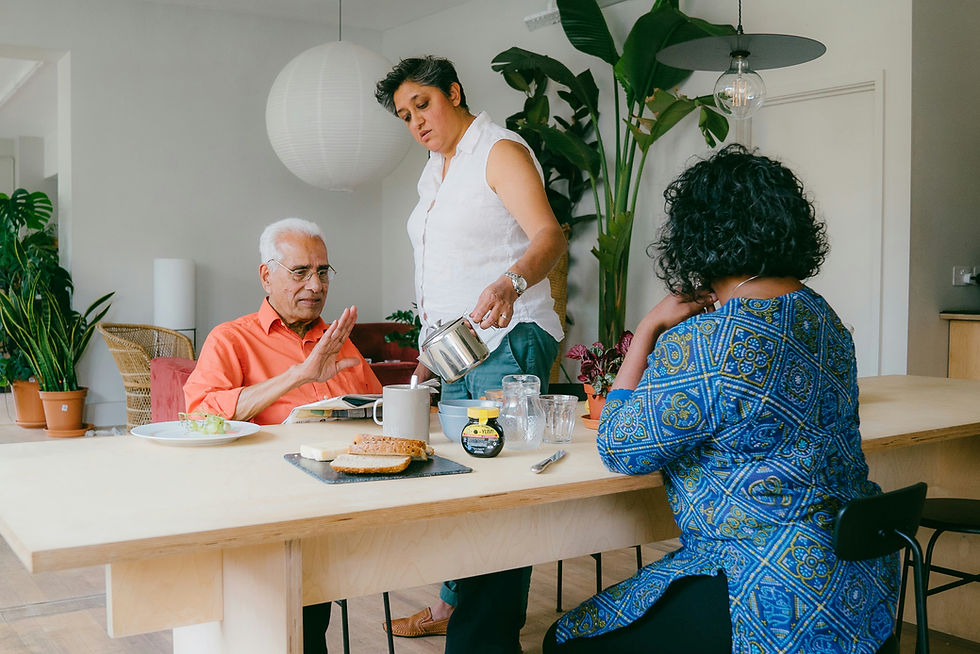
What a good first visit looks like
The family is there, at least for the first hour, and then genuinely leaves
The caregiver is introduced by name, not by function
The older adult gives the tour of their own home, because that is a small act of ownership
Nobody starts with personal care
There is a task, so the visit has a shape and does not become an interview
The caregiver asks how things are usually done, and then does them that way
The single fastest way to lose trust is to reorganize someone's kitchen on day one. The way the cups are arranged is not inefficiency. It is thirty years of muscle memory, and rearranging it tells them the house is no longer theirs.
House rules worth setting on day one
Say these out loud at the start and most later problems never happen.
Hours, arrival time, and who to call if the caregiver will be late
What is in scope and what is not, written down
Which rooms are private
Whether the caregiver eats there, and whether food is provided
Where valuables and medications are kept, and who has access
Pets, and who handles what
Phone use, visitors, and whether anyone else comes to the house
How to raise a problem, and with whom, without it becoming personal
Agencies handle background checks, bonding, insurance, supervision, and replacement when someone is sick. That is most of the reason families use one instead of hiring privately.
For caregivers: earning trust in someone else's home
You are a guest before you are anything else.
Knock, even if you have a key. Every single time.
Ask before moving anything. Then put it back where it was.
Announce what you are about to do before you do it, especially during personal care.
Keep their routine, not your preferred one.
Protect their dignity in front of visitors and family. Never discuss their body or their bathroom in front of other people.
Be exactly on time. Reliability is the entire foundation of trust in this work.
Talk to them, not about them. If a family member asks a question in the room, look at the client while you answer.
The clients who resisted hardest at the start are very often the ones who become most attached. That transition is built out of small, repeated, unglamorous consistency.
When resistance is a safety problem, not a preference
There is a line where respecting someone's choice stops being respect.
Consider escalating beyond persuasion when you see burns or pans left on the stove, medication taken twice or not at all, wandering or getting lost driving familiar routes, a fall that was hidden, weight loss, unpaid bills stacking up, or a home that has become genuinely unsanitary.
At that point the conversation should include their physician, and possibly a geriatric care manager. If capacity is genuinely in question, that is a medical and sometimes legal determination, not a family vote. Get help making it rather than arguing about it around a kitchen table.
Frequently asked questions
Why do elderly parents refuse home care?
Usually because accepting help feels like admitting they can no longer manage, and because they fear that admission leads to leaving their home. In AARP's 2024 survey, 75 percent of adults over 50 said they want to stay in their current home as they age. Cost worries, discomfort with a stranger in the house, and embarrassment about being seen at their most private are the other common reasons.
How do I get my mother to accept a caregiver?
Start by asking rather than announcing, lead with your own worry instead of her limitations, and frame the help as what keeps her in her home. Give her control over the schedule and the tasks. Begin with a small number of hours doing something she already dislikes, such as cleaning or driving, and treat it as a two week trial rather than a permanent arrangement.
How many hours should we start with?
Less than you think. Four to eight hours a week is a realistic starting point for someone who is resistant. It gives the relationship time to form without feeling like an occupation of the house. Hours can be increased once there is a person rather than a stranger.
Should we start with personal care or housekeeping?
Housekeeping, errands, or driving almost always. Bathing and toileting assistance are the most emotionally loaded tasks and are far easier to accept from someone the person already knows and trusts. Beginning with personal care is the most common reason a first caregiver gets refused.
What should we agree on before the caregiver starts?
Hours and punctuality, what is in scope and what is not, which rooms are private, food arrangements, where medications and valuables are kept, pet responsibilities, phone and visitor rules, and how to raise a problem. Putting these in writing at the start prevents most later friction.
When should we stop respecting a refusal of help?
When safety is genuinely at risk. Burns or unattended stoves, medication errors, wandering, hidden falls, significant weight loss, unpaid bills, or an unsanitary home are signals to involve a physician and possibly a geriatric care manager. Questions of decision-making capacity are medical and sometimes legal determinations, not family decisions.
Sources
AARP, 2024 Home and Community Preferences Survey, fielded 17 June to 1 July 2024 among 3,090 United States adults aged 18 and over



Comments